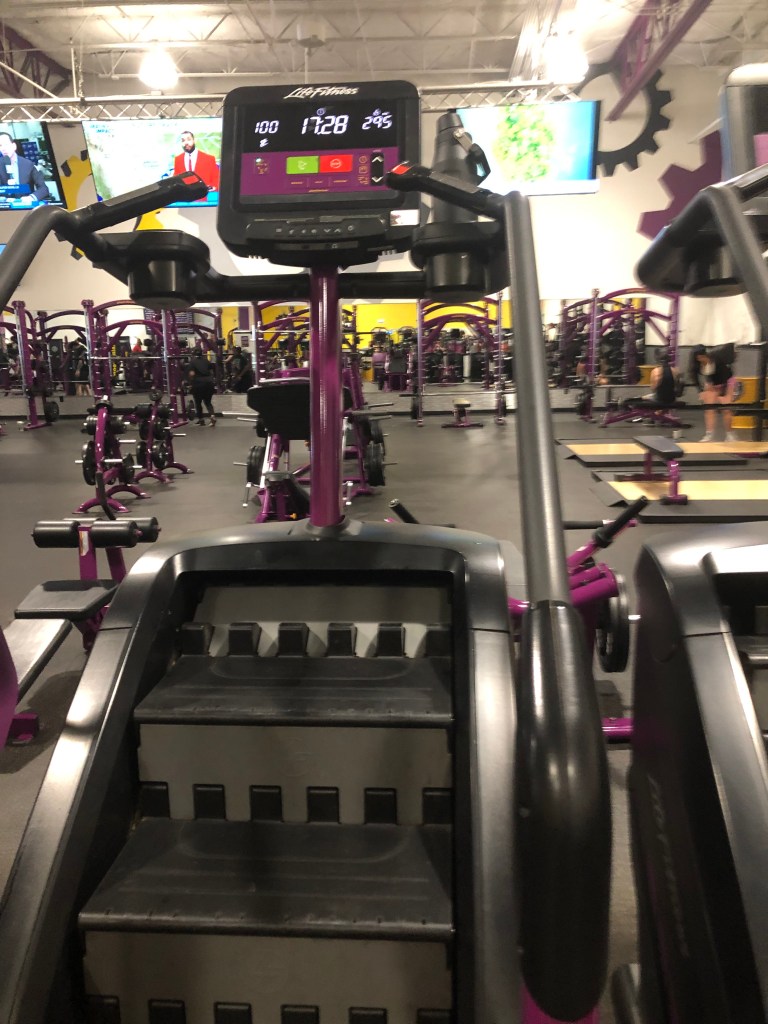
I decided to try this evil contraption a few weeks ago (pre broken toe) at our local gym (Shoutout to Planet Fitness, not a sponsor, I wish). This spawn of negativity was created to show humans what real suffering looks like in the physical form. Simply saying that this machine kicked my butt would not be fully accurate. It tore me apart from my little toes through my thighs. It destroyed my pride too.
I’m sure it has kicked many butts but it sure crushed me. That first step felt even harder than a normal staircase. If I had wanted to feel such pain, why didn’t I just ask the muscular guy lifting by me to drop his weights on my calves instead? Probably would have felt better than the stair climber…
Why did I choose the stair climber?
The idea sprung into my head when I was thinking of different ways to gain more elevation in 2026. Running up a hill is one of the best ways to do it. In Texas, hills are a little more limited. Luckily here in Austin, one can drive to hills without spending too much time in the car. From my house, you can technically run to some but it would take about 5 miles to get there.
Because of this, I have been interested in find ways I could gain elevation on a run without too much time added on to driving there. I could get much more fit and add 10 miles to my runs to get to local hills but woah, I’m not that crazy good of a runner. That leads to our only other options of elevation gain are putting up the incline on a treadmill or the dreaded stair climber. Dun dun dun. I decided that since the stair climber is steeper, I would go that route.
First things first, how does the stair climber work?
Evilely. It’s a new word that accurately describes how it works. Others would say it works as a moving staircase with no end in sight. As soon as you reach the top, the stairs continue. Is there a top of a moving staircase? Philosophy question of the day. Anyway, you are able to mess with the speed of the stairs and at our local gym the height of the stairs always remains the same. Thank goodness to that because it was steep enough for me.
The top speed that the stair climber above hits is around level 20. Not sure what it meant but it was certainly a running pace at that point. Maybe at least a 9:30 minute mile. The longest I could hold this pace for was for 45 seconds while crying and praying for my dear life. (4 floors…). I also sweat out the equivalent of the Mississippi River but that’s more of a gross fact than a fun fact.
So, does this count towards your yearly elevation gain?
From researching this, it seems it is undetermined. The answer is a consistent…maybe. One ultra runner, Max Jolliffe, credited using the stairclimber in training to his Moab 240 win. The Moab course in Utah, USA features over 31,000 feet of elevation gain (higher than Mount Everest!). Max says using the stair climber was a huge part of this win. He doesn’t say for sure if he counted this towards yearly elevation gain for data but he definitely put hours of work into it each week.
Other runners suggest that it doesn’t allow runners to replicate the downhill part of elevation training and it is different than running outside on natural terrain. When running outside, a runner incorporates foot placement and other outdoor environmental stressors. Now, this is starting to sound too technical for this blog so lets move on from those big words. I never did too hot in English class growing up…
Many runners, based off other blog posts and social media outlets as well as articles from sites including Letsrun, IRunFar, and RunnersWorld, use the following formula:
Total Elevation Gain = X feet outdoor vert + Y feet stair climber vert
So it does count! As long as it is specified it seems. Runners seem to like to seperate the two elevation gains and appreciate the transparency. As for my opinion…
Up to you!
At the end of the day, your leg muscles will be moving upwards and the pain will be hitting ya one way or the other. My yearly goal was to run over 100,000 feet in elevation so I’ll track how many of the steps I end up running. I’ll definitely walk up a good amount too though for a future Mt. Everest attempt because when I do that ultra marathon, I expect a ton of walking on my side. As for my first time doing the stair climber, I did 17ish minutes total for about 100 floors. Translates to about 1,000 feet (almost all walking).
I hope you enjoyed this topic and I would love to hear what you think! Do you track the stair climber towards your yearly elevation gain? Why or why not?
 Average Runner Paul
Leave a comment